Bonding SystemSystem Design & Balancing
A progression system that makes the relationship with a horse visible through gameplay and behaviour.
The problem
Horses felt predictable and static. Spending time with an individual horse needed to produce a noticeable sense of progress.
The system
Player actions build or reduce Bonding. In the stable view, higher Bonding changes how the horse reacts to the player through position, orientation and animation.
Balancing around a target progression time
I used the model to answer one question: given the game's existing progression pace and expected player behaviour, what should each Bonding action be worth?
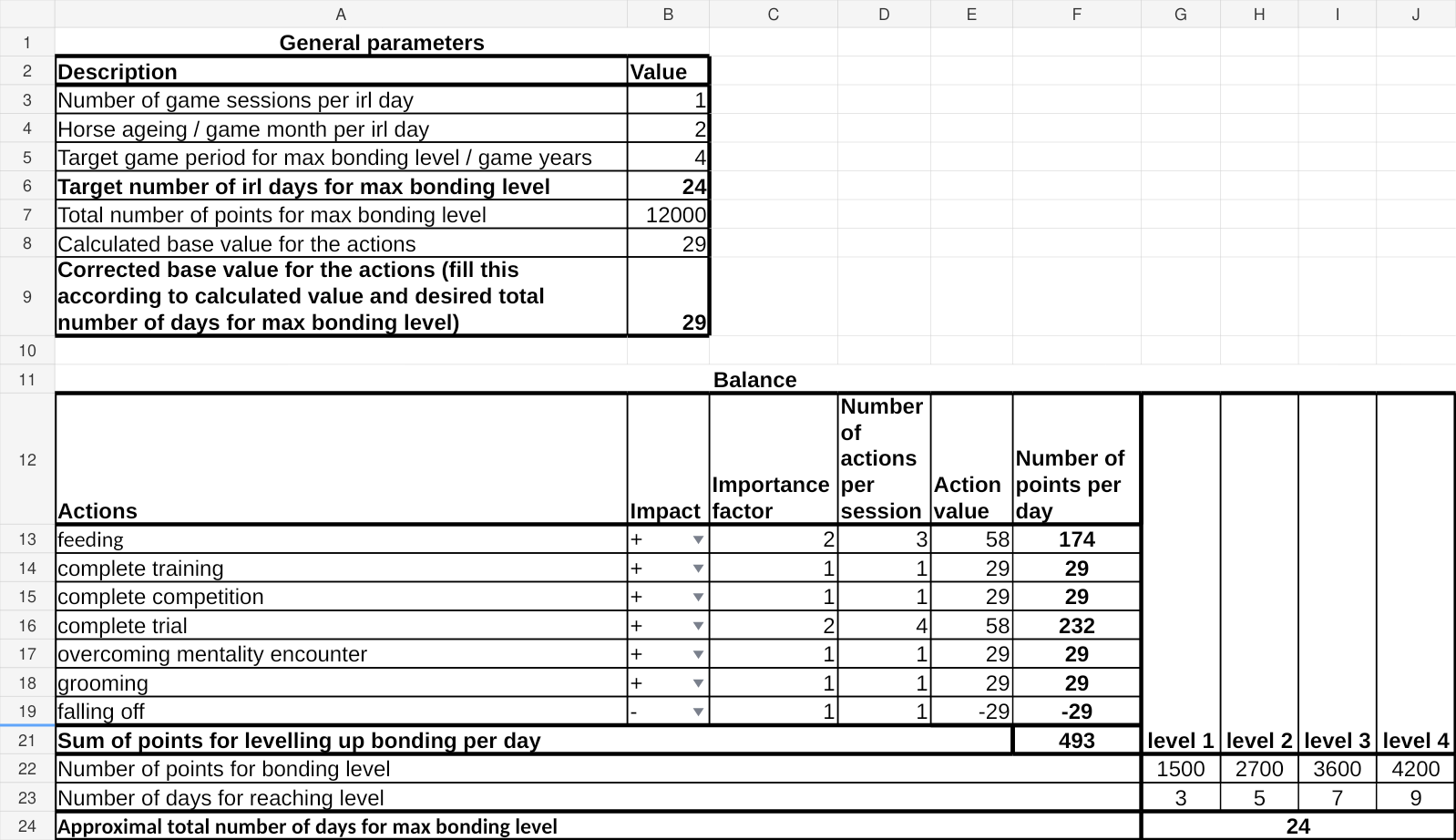
Balance model in Google Sheets
The sheet keeps pacing assumptions, action weights and calculated results in one place, so changes can be checked against the target progression time.
Open full balance model ↗Set the pacing target
| Input | Baseline |
|---|---|
| Target progression period | 4 game years |
| Horse ageing | 2 game months / IRL day |
| Sessions | 1 / day |
| Target duration | (4 × 12) / 2 = 24 IRL days |
Set maximum Bonding and the level curve
Early levels are faster to reach, so the player sees the system respond quickly. Later levels take longer, making maximum Bonding a longer-term goal.
Turn player behaviour into action values
Σ(freq × signed weight) = 17 units/day
12,000 / (24 × 17) ≈ 29
| Action | Expected / session | Weight | Weighted unitsfrequency × signed weight | Bonding / action29 × signed weight | Bonding / dayfrequency × Bonding / action |
|---|---|---|---|---|---|
| Feeding | 3 | ×2 | 6 | +58 | +174 |
| Training | 1 | ×1 | 1 | +29 | +29 |
| Competition | 1 | ×1 | 1 | +29 | +29 |
| Trial | 4 | ×2 | 8 | +58 | +232 |
| Mentality encounter | 1 | ×1 | 1 | +29 | +29 |
| Grooming | 1 | ×1 | 1 | +29 | +29 |
| Falling off | 1 | negative ×1 | −1 | −29 | −29 |
| Baseline total | 17 units / day | 493 Bonding / day | |||
Frequency is the expected number of actions per session; weight is the design importance of the action.
Feeding and trials have more weight. Training and competitions are primarily work for the horse, while trials put more emphasis on spending time together in a different setting. Feeding also gives the player another reason to buy feed from the shop.
Check the resulting pace
At 493 Bonding / day, each level lands close to the intended progression curve.
| Level step | Bonding required | Estimated days at 493/day |
|---|---|---|
| 0 → 1 | 1,500 | ~3 |
| 1 → 2 | 2,700 | ~5 |
| 2 → 3 | 3,600 | ~7 |
| 3 → 4 | 4,200 | ~9 |
| Total / max Bonding | 12,000 | ~24 days |
Stress-test the pacing
Action frequencies were assumptions, so I checked what happens when player activity changes.
| Activity | Without cap | With 600/day cap |
|---|---|---|
| 75% of baseline | ~33 days | ~33 days |
| Baseline | ~24 days | ~24 days |
| 125% of baseline | ~19 days | ~21 days |
| 3× baseline | ~8 days | ~21 days |
Without a limit, repeatable actions could cut a multi-week progression down to about a week. I set the daily positive Bonding cap to 600, leaving baseline play unchanged while keeping the fastest possible progression at about 20 days.
Showing Bonding in the stable
Higher Bonding brings the horse closer to the player, with more attention and more expressive behaviour.
Distant
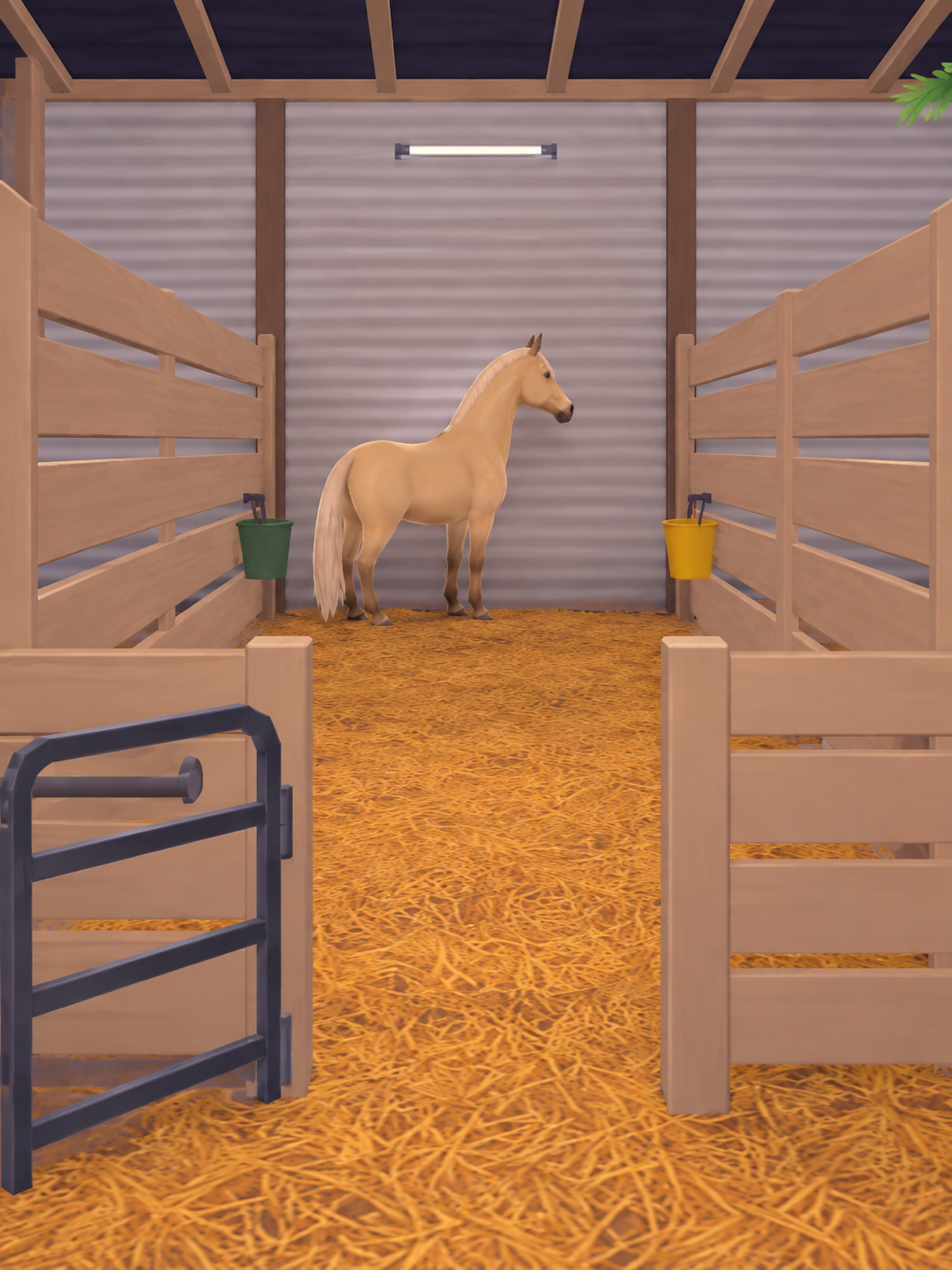
Alert posture · Looks away
Relaxed
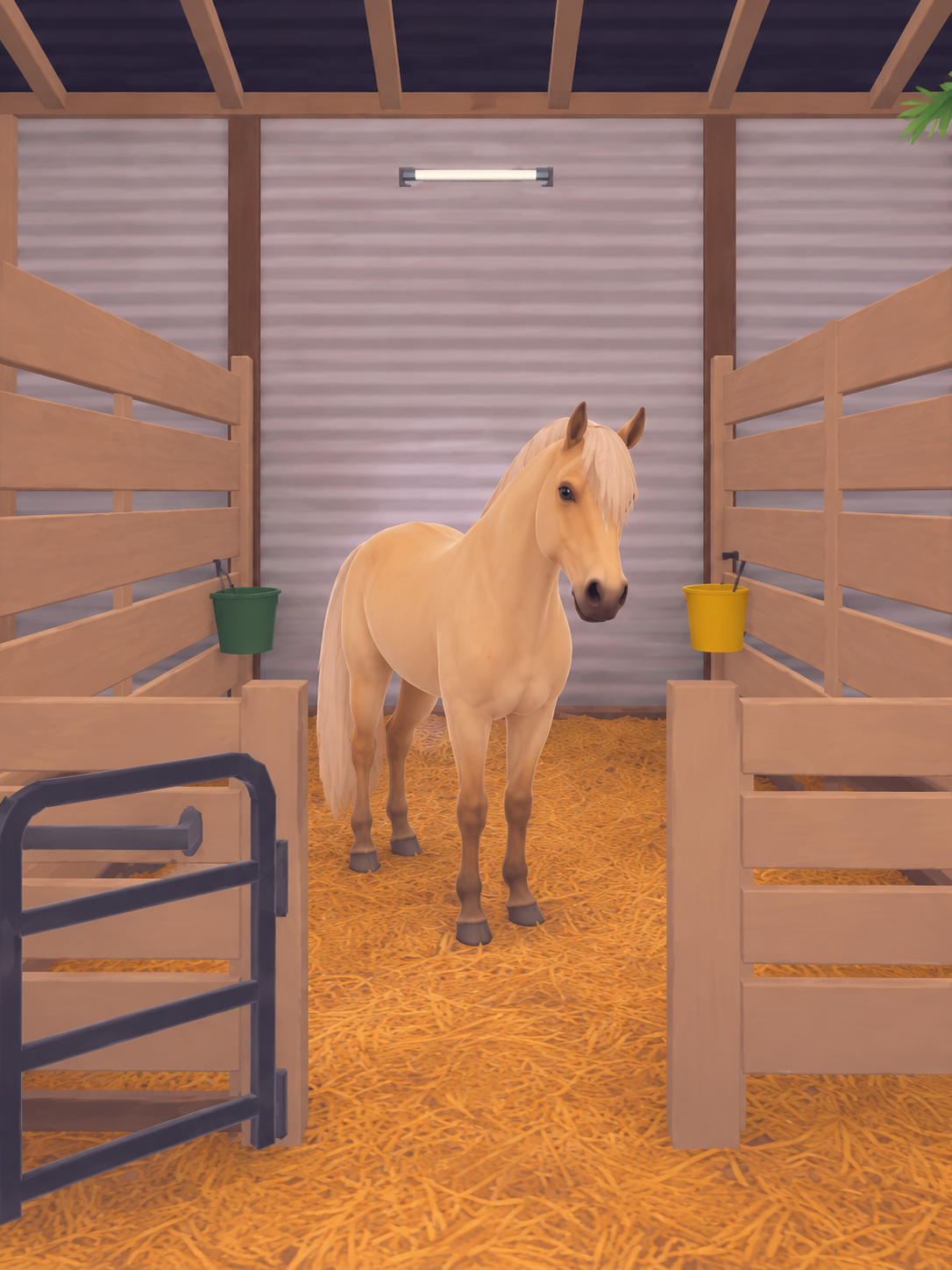
Relaxed posture · Looks toward the player
Responsive
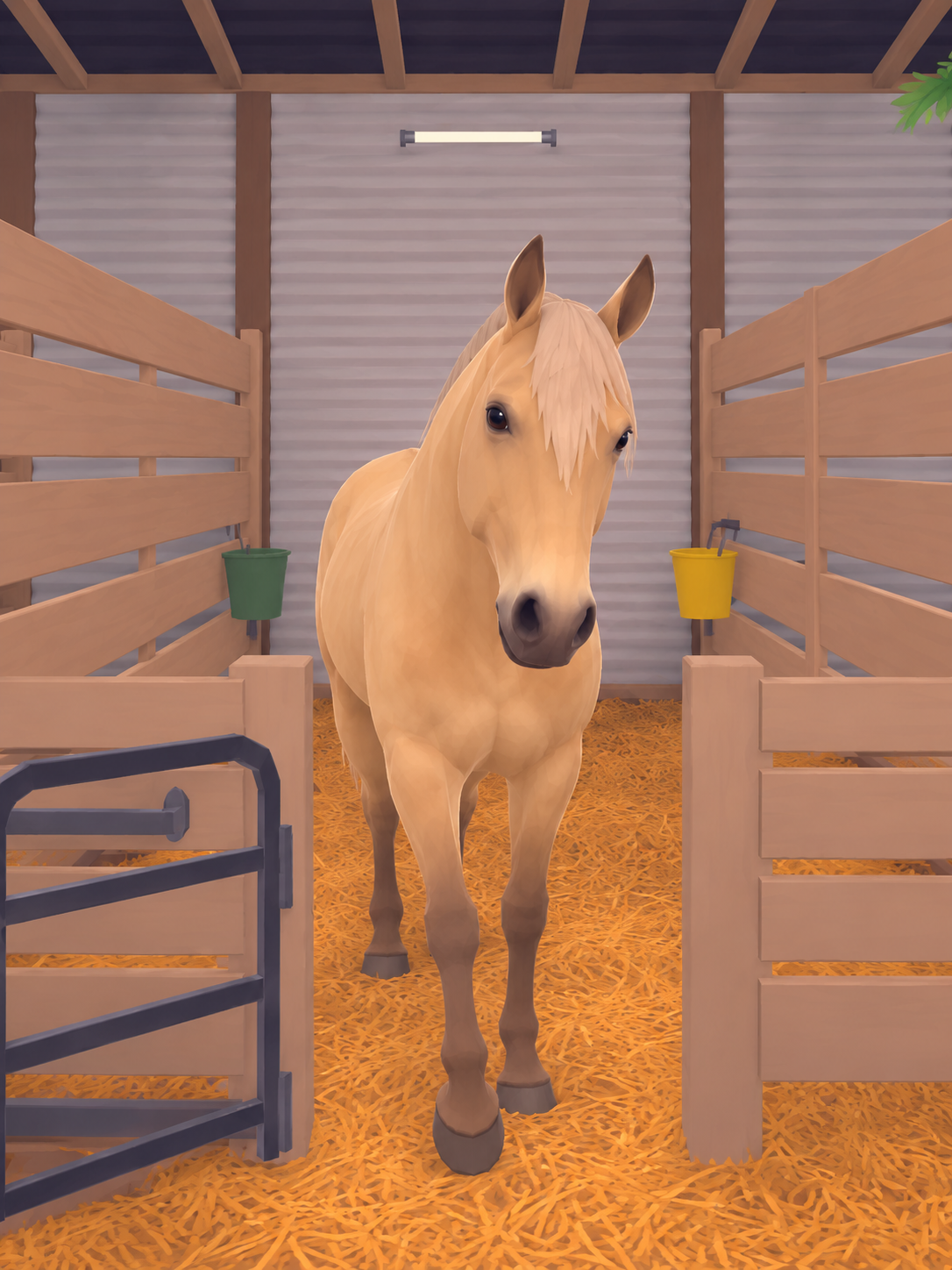
Greets the player · More varied idles
View behaviour specification · all five levels
| Bonding | Position & orientation | Example behaviour |
|---|---|---|
| Level 0 | Steps away toward the back of the stall, ~65° from the player | Alert posture; head high; does not look at the player |
| Level 1 | Stays in place, ~45° | More relaxed stance and idle; still does not look at the player |
| Level 2 | Stays in place, ~35° | Relaxed idle; can look at the player |
| Level 3 | Steps toward the player, ~20° | Greets the player with a bow, then returns to relaxed idles |
| Level 4 | Stays close and faces the player, ~20° | Looks out to greet the player; playful movement and more varied idles |
Keeping the system easy to tune
The main progression and behaviour parameters should be editable by a designer in Unity.
- Actions & valuesAdd, remove and tune Bonding actions.
- Level progression curveControl how Bonding requirements grow between levels.
- Daily gain capLimit positive Bonding gained per day.
- Bonding decaySet when decay starts and how quickly Bonding is lost.
- Horse positionSet where the horse stands in the stall.
- Horse orientationSet how directly the horse faces the player.
- Opening animationChoose the first reaction when the stable view opens.
- Idle animation setChoose the idle behaviour pool for the level.
These controls let the designer tune progression and make each Bonding level read clearly without changing the underlying system.
Seasonal Meta-Progression
A 13-week Battle Pass progression model for a solo Battle Royale, balanced across survival time, quest pacing, and absence resilience.
Seasonal Meta-Progression: Pacing, Motivation & Reward Architecture →
100-tier progression track with zero required wins, non-expiring weekly catch-up quests, and a deterministic 1,274-row simulation model in Google Sheets.
Read Battle Pass case study →